menu_book The Full Narrative
01
The Emperor's Lights
The historical Emperor Mingdi of the Eastern Han sent envoys to India for Buddhist scriptures and ordered lanterns displayed in the imperial palace and temples on the fifteenth day of the first month. From this religious observance grew a national festival of light — and, crucially for the riddle tradition, a literate audience eager for amusement.
02
The Riddle on the Lantern
Somewhere between the palace and the marketplace, scholars attached written puzzles to their lanterns. A lantern riddle is a short verse or phrase with a hidden answer — sometimes a character, sometimes a word, sometimes a proverb. The best riddles are miniature works of wit, demanding both learning and quick thinking under the lantern light.
03
Wordplay Across the Centuries
Lantern riddles remain a fixture of the fifteenth-day festival, pasted on lanterns in temple fairs and community squares. They test homophones, puns, and classical allusions — a living practice of Chinese linguistic play. The tradition links the scholar's study to the night market, and the emperor's piety to the people's laughter.
04
Four Riddle Crafts and One Rule
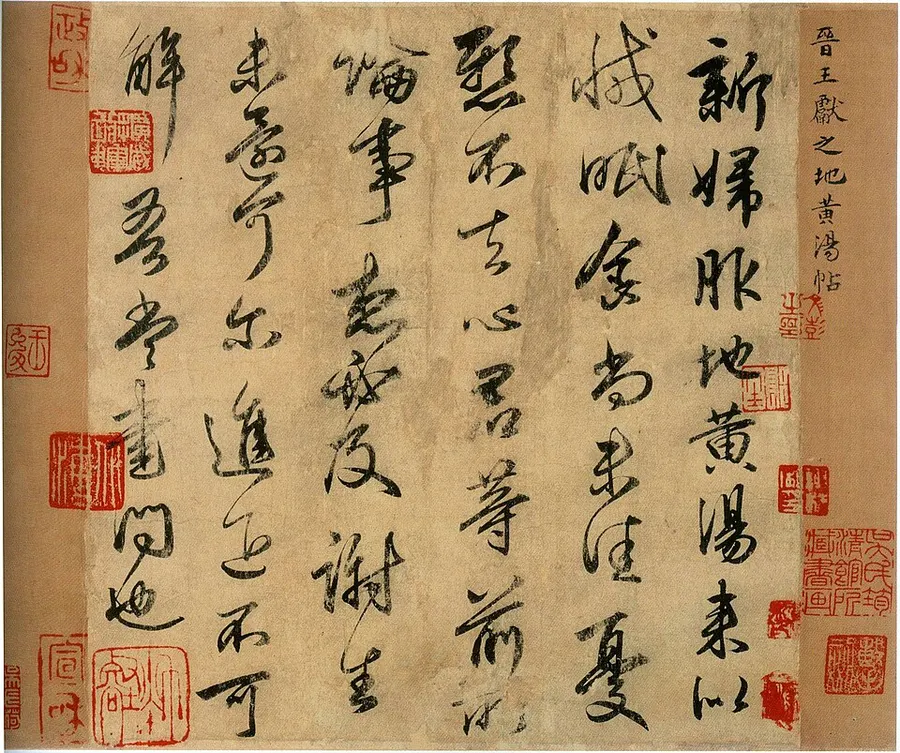
Serious riddle guilds classify puzzles into named techniques, including character-splitting that rebuilds a hanzi from its parts and homophone substitution that swaps a sound for a sense. The one strict rule separates riddles from quizzes: the answer must never share a character with the clue. Solving rewards exactly the graphic reasoning drilled through seal-script character structure, where strokes carry meaning.
05
Riddle Alleys and Prize Tables
Modern festival organizers hang hundreds of numbered slips along Nanjing Confucius Temple lantern alleys and Taiwan temple courtyards each fifteenth night, with prizes claimed at a staffed table. City riddle societies publish annual anthologies, and schools hold preliminary contests weeks before the festival. The game that amused Han courtiers now runs on QR codes as often as paper slips.
06
From Palace Lanterns to Festival Economics
Lantern culture now drives one of the most valuable festival economies in China. Zigong in Sichuan exports lantern exhibitions to more than seventy countries each year, and its annual fair reported over eight million visitors before the pandemic. Nanjing rebuilt the Qinhuai lantern fair around Confucius Temple after 1984, and the district now records peak single-night crowds above three hundred thousand. The riddles themselves migrated onto LED screens and WeChat mini-programs, yet the prize table and the numbered paper strip survived as the core mechanic. City governments treat the fifteenth night as the closing ceremony of the entire Spring Festival season, scheduling drone shows beside the traditional lantern festival processions. The economics explain the persistence: a successful lantern district generates hotel, restaurant, and transport revenue that ordinary night markets cannot match.
07
Riddles Move Into the Classroom
Lantern riddles gained an institutional afterlife inside schools. Municipal education bureaus in Nanjing, Shantou, and Shishi publish lantern-riddle teaching packets, and several primary schools run weekly riddle periods where students compose clues under the same rules that govern competition circuits. The discipline rewards exactly the skills language teachers want: character decomposition drills radical structure, homophone riddles sharpen phonological awareness, and the no-repeated-character rule forces vocabulary breadth. National student competitions now draw thousands of entries annually, and university riddle societies publish journals that archive clue techniques for teachers. Cross-strait exchanges added momentum, with Taiwan's societies hosting mainland teams in alternating-year tournaments since the 1990s. Publishers keep riddle anthologies in print as supplementary readers, and app developers license classic clue banks for study games. The craft thus survives twice over, once as festival street play and once as pedagogy, each market funding the other's calligraphy-linked wordplay tradition.