Traditional Crafts
Beijing, North China
Shang Dynasty (1600–1046 BCE), oracle bone script
Representative List
Master-Apprentice (Hands-on)
Chinese Calligraphy Practice
Chinese Calligraphy
"The supreme Chinese visual art — writing characters with brush and ink as an expression of the writer's inner spirit and cultivation."
CIVILIZATION CONTEXT
This artifact is part of the Intangible Heritage Cluster. It connects to 11 entities across the atlas, spanning 1 region, 1 master, 0 festivals, and 1 skill.
Chinese Calligraphy: A Living Heritage
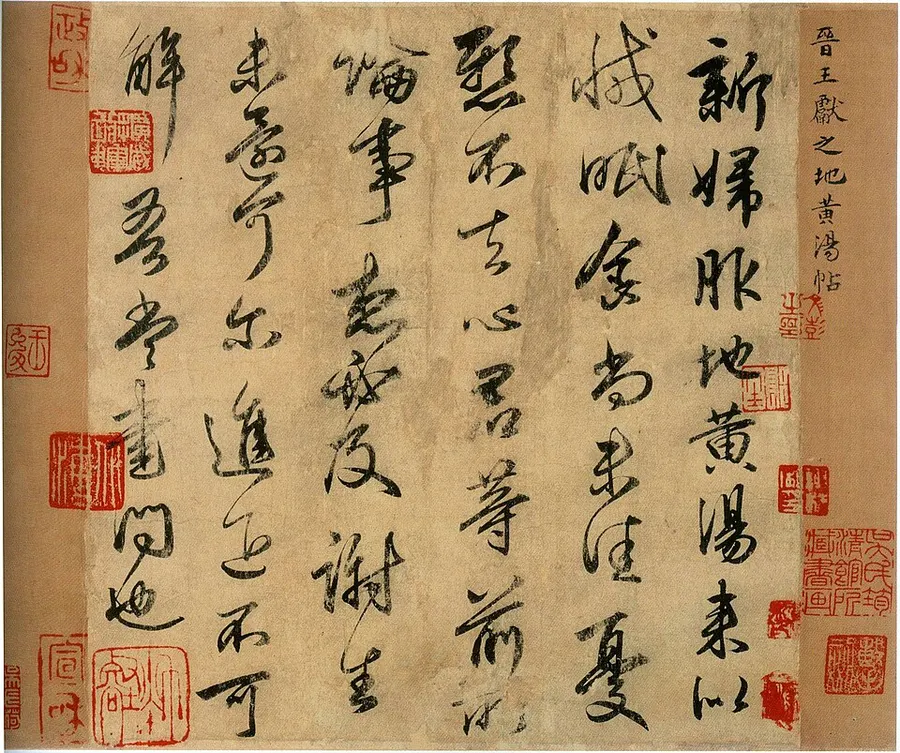
Chinese calligraphy (shufa) is the artistic writing of Chinese characters using brush and ink. More than mere writing, it is considered the highest form of visual art in Chinese culture, expressing the writer's character, emotion, and spiritual cultivation. Five script styles — seal, clerical, regular, running, and cursive — offer different expressive possibilities. Master calligraphers spend a lifetime perfecting their brushwork.
3072+
Years of Unbroken Lineage
1
Related Cultural Vectors
History & Development
Chinese writing appears fully formed on Shang-dynasty oracle bones around 1250 BCE, and every later style grew from carving and copying that script. Clerical script standardised strokes under the Qin and Han, Wang Xizhi wrote the Preface to the Orchid Pavilion Gathering in 353 CE and set the model for running script, and Tang examiners required neat regular script from every civil-service candidate.
Calligraphy travelled with paper and Buddhism across East Asia, and collectors priced famous letters above paintings by the Song period. UNESCO inscribed Chinese calligraphy on the Representative List in 2009, describing it as a living art practised daily by millions of students and amateurs.
How It Is Made
- 01
Grinding the ink
An ink stick is ground slow circles on a damp stone until the liquid flows black and glossy; fresh grinding gives each sitting its own density.
- 02
Holding the brush upright
The shaft stands vertical in an open grip so force travels from shoulder through wrist into every stroke rather than from finger pressure alone.
- 03
Following stroke order
Characters are built top-to-bottom, left-to-right, horizontal before vertical; the sequence keeps rhythm steady and shapes consistent across scripts.
- 04
Copying model works
Students reproduce classic rubbings letter by letter, first tracing outlines and later writing freehand beside the model until their hand absorbs the proportions.
Common Questions
Which script should beginners learn?
Regular script (kaishu) comes first because its clear stroke boundaries train structure. Running and cursive scripts follow once the hand can keep proportions without slowing down.
What tools make up the Four Treasures?
Brush, ink stick, ink stone, and paper. Xuan paper from Jing County absorbs ink in graded blooms, which is why it remains the standard support for serious practice.
How does calligraphy connect to seals?
Painters close a work by stamping a carved seal, so seal-script characters and knife-cut lines share the same aesthetic world explored in seal engraving traditions recognised nationally since 2006.
Watch & Learn
Stories & Legends
How Cloisonné Entered the Imperial Court
historicalThe art of trapping color in metal, from Byzantium to Beijing.
Skills & Techniques
Chinese Calligraphy Practice expand_more
The art of writing Chinese characters with brush and ink, requiring mastery of brush pressure, speed, and stroke order across multiple script styles.
Steps
- Prepare ink by grinding an ink stick on an ink stone with water
- Choose the appropriate brush for the desired script style
- Lay xuan paper flat on a felt mat
- Practice basic strokes — horizontal, vertical, dot, hook, and flick
- Copy classical models in seal, clerical, regular, running, or cursive script
- Control brush pressure for thick/thin variation and ink saturation
Tools
calligraphy brush (various sizes), ink stick, ink stone, xuan paper, felt mat, paperweight
Materials
Chinese ink stick, xuan paper, water
Related Places
Generations Preserved
Zhang Yu
Zhang Yu is a master calligrapher and seal engraver from Beijing, recognized for his mastery of all five script styles. A professor at the China Academy of Art, he has exhibited works in over 20 count...
Relationship Constellation
Tracing the invisible threads that connect Chinese Calligraphy to the broader civilization ecosystem.