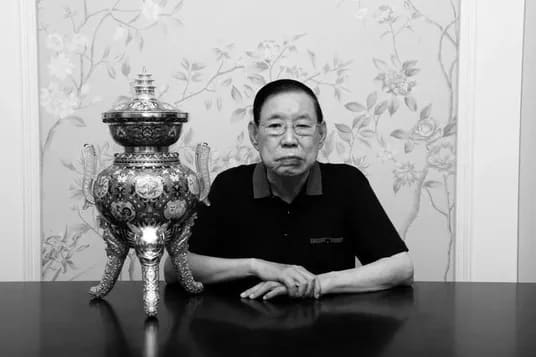
Zhang Tonglu
张同禄
Zhang Tonglu (1942-2022) was a cloisonne (Jingtailan) master and a first-batch national representative inheritor of the craft. Born in Quyang, Hebei, he trained at the Beijing Cloisonne Factory and spent decades designing new forms, recovering lost techniques and bringing enamelling into contemporary art.
Zhang Tonglu (1942-2022), born in Quyang, Hebei, was a first-batch national representative inheritor of cloisonne (Jingtailan) making techniques and a China Arts and Crafts Master. He apprenticed at the Beijing Cloisonne Factory in 1958, studied metalwork at the Beijing Arts and Crafts School, and spent his career designing cloisonne, restoring lost casting methods and extending the craft into outdoor art.
Heritage DNA
Classification
National Inheritor
Status
deceased
Year of Birth
1942
Location
Beijing
Region
North China
Next Master
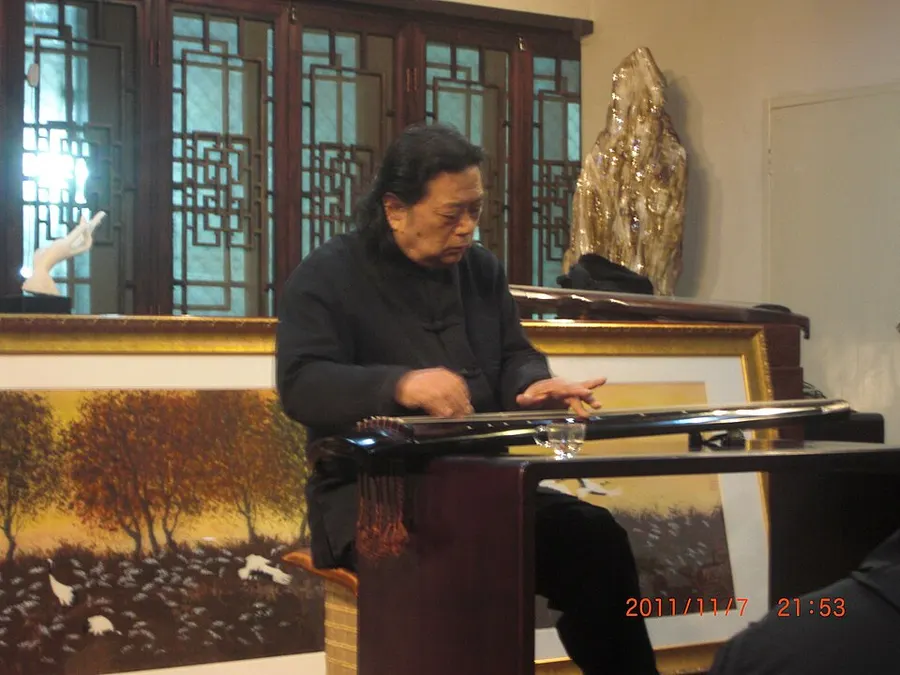
Li Xiangting
李祥霆
See the Craft in Motion
The Cultural Network
Heritage is not a static artifact; it is a living web. These connections trace how a practice travels between people, places and crafts, and how Zhang's work sits within a wider tradition.
Domains of Mastery
Territories of Heritage
Geography shapes identity. Journey through the historical corridors that defined a civilization, from the arid Silk Road to the lush Tea Horse Road.
Beijing
North China
Masters of the Tradition
The true archive of heritage is found in the hands and minds of those who refuse to let the fire die out.
History & Development
Zhang Tonglu was born in 1942 in Quyang county, Hebei province, and is registered in the national inheritor records under Beijing. He entered the Beijing Cloisonne Factory in 1958 to learn body-making, then studied metalwork at the Beijing Arts and Crafts School. He returned to the factory’s cloisonne workshop and rotated through filigree, enamelling and polishing, learning the full chain of production.
From 1963 he worked as a designer and later served as deputy factory director and chief craftsman. He restored casting methods that had been lost, experimented with new enamel materials and created works that combined cloisonne with other crafts. He also pushed the technique beyond small objects into large outdoor and architectural pieces, widening what Jingtailan could be used for.
After retirement he continued to design and to teach apprentices. He was named a China Arts and Crafts Master and, in 2007, a first-batch national representative inheritor for cloisonne making. He died in 2022. The craft itself is described on our Cloisonne page.
Zhang Tonglu at a Glance
Core facts from the official national inheritor registry, Baidu Baike and CCTV records.
| Detail | Record |
|---|---|
| Born - died | 1942 - 2022 |
| Birthplace | Quyang county, Hebei province; registered in Beijing |
| Registry | First-batch national representative inheritor (01-0165), 2007 |
| Craft | Cloisonne (Jingtailan) making techniques, project VIII-43 |
| Title | China Arts and Crafts Master |
| Training | Beijing Cloisonne Factory, 1958; Beijing Arts and Crafts School, 1959 |
| Contribution | Restored lost casting methods; developed enamel crystal; outdoor cloisonne art |
| Representative works | Ding Sheng Zhong Hua; Shi Er Zhang Wen; Bai Tou Xie Lao; Tai Ping You Xiang |
Cultural Traditions
-
A Complete Craft Chain
Zhang trained in every stage of cloisonne — body-making, filigree, enamelling, firing and polishing — rather than specialising in a single step. That breadth informed his design work.
-
Recovering Lost Methods
He worked to restore casting techniques that had fallen out of use and explored new enamel materials, documented in the official inheritor record.
-
Beyond the Vessel
He extended cloisonne from small decorative objects into outdoor and architectural art, changing the scale and setting of the craft.
-
Teaching Apprentices
The official record notes his long work training disciples and his influence within the cloisonne trade.
Common Questions
Who was Zhang Tonglu?
Zhang Tonglu (1942-2022) was a Chinese cloisonne master, a China Arts and Crafts Master and a first-batch national representative inheritor of cloisonne (Jingtailan) making techniques.
Where was Zhang Tonglu born?
He was born in Quyang county, Hebei province, in 1942. The national inheritor registry lists his registration under Beijing, where he trained and worked for most of his career.
What did Zhang Tonglu contribute to cloisonne?
He restored lost casting methods, developed new enamel materials, designed many new works and extended cloisonne into large outdoor and architectural pieces. He also trained many apprentices.
What is cloisonne?
Cloisonne, or Jingtailan in Chinese, is a metalwork enamelling craft in which thin copper wires form compartments that are filled with coloured enamel and fired. Our Cloisonne page describes its history and technique.
What are Zhang Tonglu’s best-known works?
Works associated with him include Ding Sheng Zhong Hua, Shi Er Zhang Wen, Bai Tou Xie Lao and Tai Ping You Xiang, as listed in the biographical record.
Behind the name
A life in craft leads somewhere you can visit.
The visit layer traces the traditions behind these profiles to the places where the craft is still taught and practised today.
This is a reading link, not a booking. Opening hours, tickets and prices change — check current details with the provider on the visit page.
The Atlas is Living
Every master is a living archive. Join a collective of explorers, artisans, and scholars dedicated to tracing the vibrant pulse of our shared world.