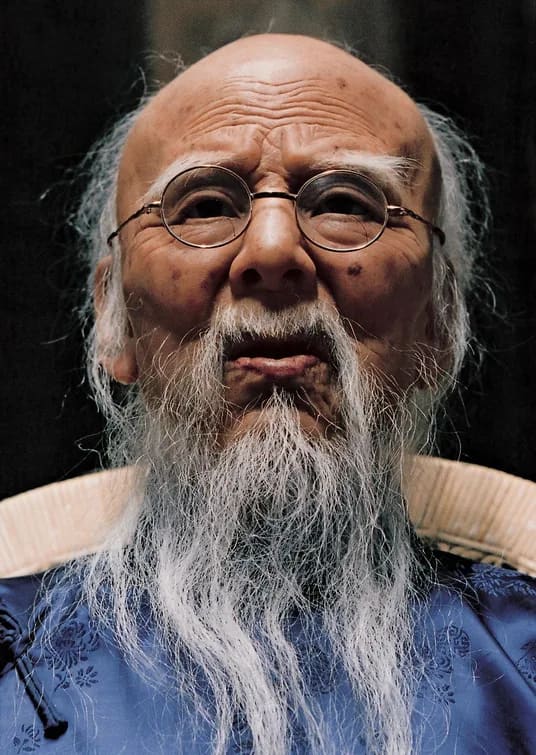
Qi Baishi
齐白石
Qi Baishi (1864-1957) was a Chinese painter, calligrapher and seal carver who rose from a carpenter's apprenticeship to become one of modern China's most influential artists. Settled in Beijing, he is best known for lively ink paintings of shrimp, flowers and insects and for the bold "red flower and ink leaf" style of his later years.
Qi Baishi (1864-1957) was a Chinese painter, calligrapher and seal carver from Xiangtan, Hunan, who settled in Beijing and became one of the most influential artists of modern China. A former woodcarver largely self-taught, he developed a bold "red flower and ink leaf" style and was named a "People's Artist" by the Ministry of Culture in 1953.
Heritage DNA
Classification
Master of the Craft
Status
deceased
Year of Birth
1864
Location
Beijing
Region
North China
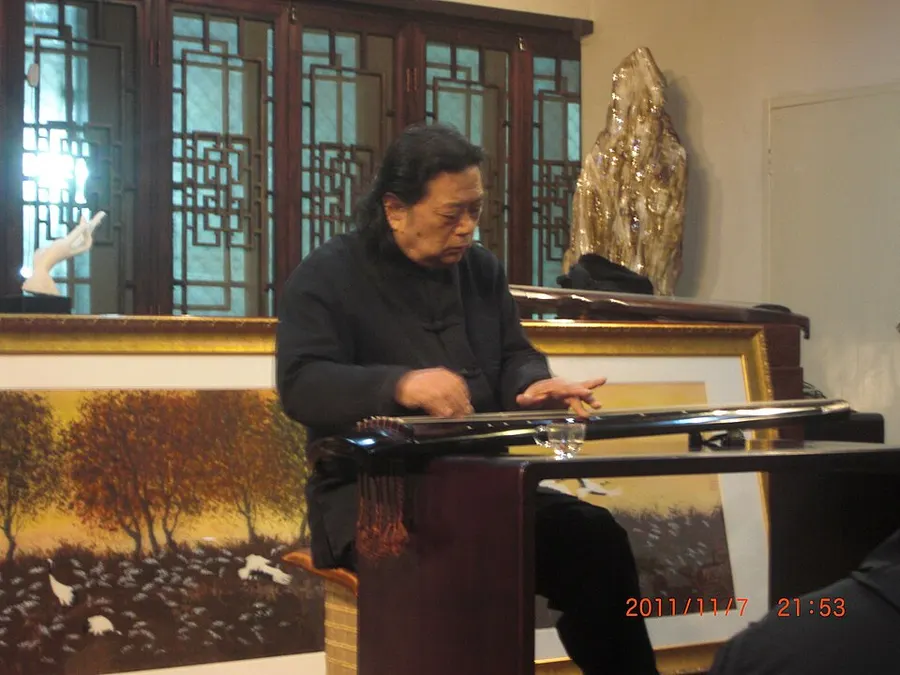
Next Master
Li Xiangting
李祥霆
See the Craft in Motion
The Cultural Network
Heritage is not a static artifact; it is a living web. These connections trace how a practice travels between people, places and crafts, and how Qi's work sits within a wider tradition.
Domains of Mastery
Territories of Heritage
Geography shapes identity. Journey through the historical corridors that defined a civilization, from the arid Silk Road to the lush Tea Horse Road.
Beijing
North China
Masters of the Tradition
The true archive of heritage is found in the hands and minds of those who refuse to let the fire die out.
History & Development
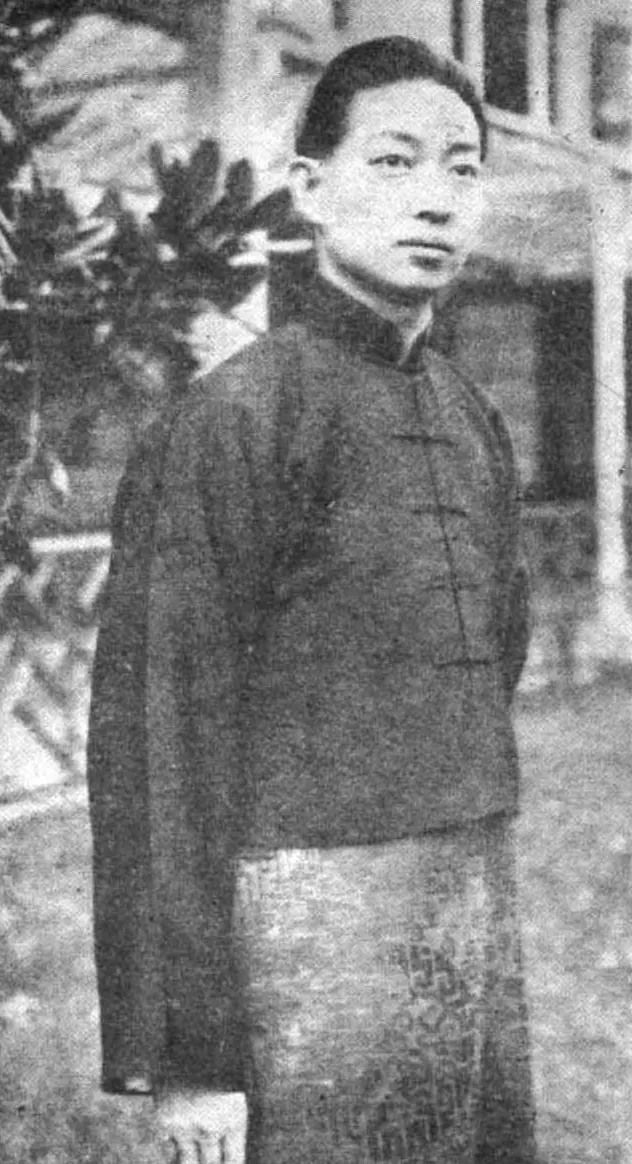
Qi Baishi was born into a poor farming family in Xiangtan, Hunan, in 1864. He attended a brief private-school education, then herded cattle and cut firewood while teaching himself to draw. At fifteen he was apprenticed as a carpenter and became known for carved woodwork, copying the Mustard Seed Garden Manual of Painting for patterns. In his twenties he studied painting and poetry with local teachers in Xiangtan, and from his forties travelled through China, a period he called "five comings and goings".
He settled in Beijing in 1919 at the encouragement of the painter Chen Shizeng. There he undertook the "late-life change" (suinian bianfa) that defined his mature art, moving from a finer manner toward a bold, abbreviated freehand style. He synthesized the approaches of earlier masters such as Xu Wei, Zhu Da (Bada Shanren), Shitao and Wu Changshuo into a personal language, and his "red flower and ink leaf" manner paired vivid colour with saturated ink. He taught at the National Beiping Art School and later held honorary posts at the Central Academy of Fine Arts.
During the War of Resistance he refused to sell paintings to the occupying authorities. After 1949 he served as president of the China Artists Association and was elected a deputy to the first National People's Congress. In 1953 the Ministry of Culture awarded him the honorary title "People's Artist"; in 1956 he received the International Peace Prize from the World Peace Council. He died in Beijing in 1957 and was later named one of the World Cultural Celebrities.
Qi Baishi at a Glance
Core facts from CCTV and the China Federation of Literary and Art Circles profiles of the artist.
| Detail | Record |
|---|---|
| Born - died | 1864 - 1957 (his own account added two years, so 1863 also appears) |
| Names | Born Chunzhi (纯芝); later named Huang (璜), style name Baishi (白石) |
| Origins | Xiangtan, Hunan; settled in Beijing from 1919 |
| Fields | Painting, calligraphy, seal carving, poetry |
| Early trade | Carpenter and woodcarver before turning to art in his twenties |
| Style | Large freehand ink; late "red flower and ink leaf" (红花墨叶) manner |
| Signature subjects | Shrimp, flowers, insects, vegetables, landscapes, figures |
| Recognition | "People's Artist" (Ministry of Culture, 1953); International Peace Prize (1956) |
Cultural Traditions
-
From Craft to Brush
Qi Baishi began as a woodcarver and was largely self-taught as a painter. His early carving and pattern-copying gave him a grounding in line and decoration that he never entirely abandoned.
-
The Late-Life Change
Around his sixties he deliberately changed direction, abandoning a more careful style for a freer, more abbreviated one. Chinese sources call this suinian bianfa, the transformation that produced his best-known manner.
-
Observing Small Lives
His shrimp, insects and vegetables come from close observation rather than studio convention. He kept live shrimp and insects to watch their movement, then reduced what he saw to a few expressive brushstrokes.
-
Poetry, Calligraphy and Seals
Qi worked across painting, poetry, calligraphy and seal carving, and saw them as one practice. His seals and inscriptions are integral to the composition rather than added signatures.
Common Questions
Is Qi Baishi Chinese?
Yes. Qi Baishi was born in Xiangtan, Hunan Province, in 1864 and spent most of his career in Beijing. He is regarded as one of the leading Chinese painters of the modern era.
How many paintings did Qi Baishi make?
No reliable total exists. Sources describe a very large and long-running body of work produced over a career of more than sixty years, but paintings, calligraphy, seals and poems are catalogued separately, so a single figure is not meaningful.
How do you pronounce Qi Baishi?
Qi Baishi is pronounced roughly "chee bye-shr", with a falling tone on Qi and a neutral or light tone on the second syllable of Baishi. It is the art name of Qi Huang.
What is Qi Baishi most famous for painting?
He is best known for ink paintings of shrimp, though flowers, insects, vegetables and landscapes were also central to his work. His late "red flower and ink leaf" style is among his most recognizable contributions.
Was Qi Baishi self-taught?
Largely, yes. He had only brief formal schooling, learned woodcarving as an apprentice, and studied painting and poetry with local teachers before developing his own style in middle age.
Behind the name
A life in craft leads somewhere you can visit.
The visit layer traces the traditions behind these profiles to the places where the craft is still taught and practised today.
This is a reading link, not a booking. Opening hours, tickets and prices change — check current details with the provider on the visit page.
The Atlas is Living
Every master is a living archive. Join a collective of explorers, artisans, and scholars dedicated to tracing the vibrant pulse of our shared world.