Traditional Crafts
Beijing, North China
Tang Dynasty (618–907 CE), influenced by Buddhist and Daoist knot symbolism
National Heritage
Master-Apprentice (Hands-on)
Oral Tradition
Chinese Knotting
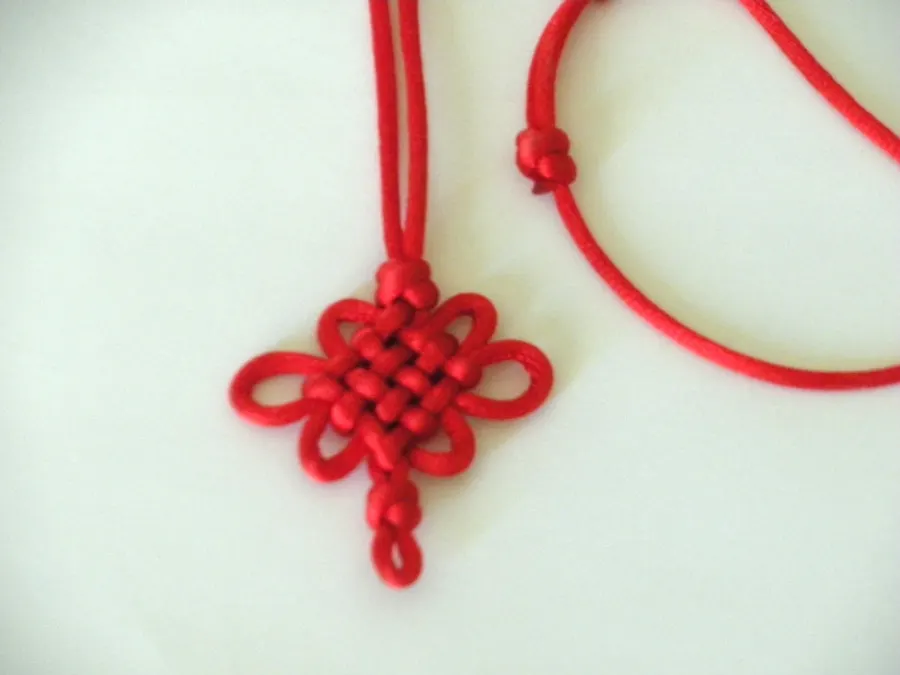
"Decorative silk cord knots symbolizing good fortune — a handcraft art where each knot shape carries deep cultural meaning."
CIVILIZATION CONTEXT
This artifact is part of the Intangible Heritage Cluster. It connects to 5 entities across the atlas, spanning 1 region, 0 masters, 1 festival, and 0 skills.
Chinese Knotting: A Living Heritage
Chinese knotting (zhongguojie) is a decorative handcraft art of tying cords into intricate, symmetrical knots. Each knot has a symbolic meaning — the butterfly knot (happiness), the double coin knot (wealth), the pan-chang knot (eternity). Using a single silk or cotton cord, practitioners weave knots without cutting, gluing, or stitching. Knots are used as jewelry, home decoration, and gift embellishments, especially during Spring Festival and weddings.
1119+
Years of Unbroken Lineage
0
Related Cultural Vectors
History & Development
Knotted cord served China before writing, when officials tied rope records to track debts and events, a practice noted in early texts as jie sheng ji shi. Decorative knots later fastened belts, fans, and lantern tassels through Tang and Song daily life, with Warring States bronzes already showing knot motifs on garment hooks.
The modern revival began in Taiwan during the 1980s, when researcher Chen Xia-sheng catalogued surviving weaves in museum collections and published manuals that fixed the English name Chinese knotting. The single-cord craft spread back to the mainland as a New Year decoration industry, with workshops selling millions of pan chang knots each spring festival season.
How It Is Made
- 01
Choosing one cord
Crafters select a single length of braided cord, often red, because cutting mid-work breaks the continuity symbolism the finished knot carries.
- 02
Pinning the layout
The cord winds around pins on a cork board following grid diagrams, looping symmetrically before any tightening begins.
- 03
Tightening in sequence
Working from the centre outward, fingers draw each loop even and firm so petals match in size and the knot keeps its flat medallion form.
- 04
Finishing with tassels
Ends leave the base as fringe or attach jade beads and coins, turning the knot into a hanging ornament ready for doors and gift boxes.
Common Questions
Why must the cord never be cut?
One continuous line stands for unbroken luck and lasting connection, so a proper knot begins and ends with only short trimmed tails hidden in the weave.
Which knot designs appear most often?
The button knot, cloverleaf, round brocade, and pan chang cover most decorations, each named for everyday objects whose shapes the loops imitate.
When do people hang these knots?
Spring festival leads demand, pairing red knots beside door banners and New Year woodblock prints as matching symbols of renewal at the family entrance.
Watch & Learn
Stories & Legends
How Cloisonné Entered the Imperial Court
historicalThe art of trapping color in metal, from Byzantium to Beijing.
Related Places
Related Festivals
Relationship Constellation
Tracing the invisible threads that connect Chinese Knotting to the broader civilization ecosystem.
Continue the Journey
Chinese Knotting
Traditional Crafts
Dough Figurine Art
Traditional Crafts
arrow_forwardSugar Painting
Traditional Crafts
arrow_forwardJingdezhen Porcelain
Traditional Crafts
arrow_forward