Traditional Medicine
Beijing, North China
Ming Dynasty (1368–1644 CE)
National Heritage
Lineage Transmission
Guasha Scraping Technique
Guasha Scraping Therapy
"A healing technique of scraping the skin to release toxins and improve circulation — a Ming Dynasty folk remedy still widely used."
CIVILIZATION CONTEXT
This artifact is part of the Intangible Heritage Cluster. It connects to 7 entities across the atlas, spanning 1 region, 0 masters, 0 festivals, and 1 skill.
Guasha Scraping Therapy: A Living Heritage
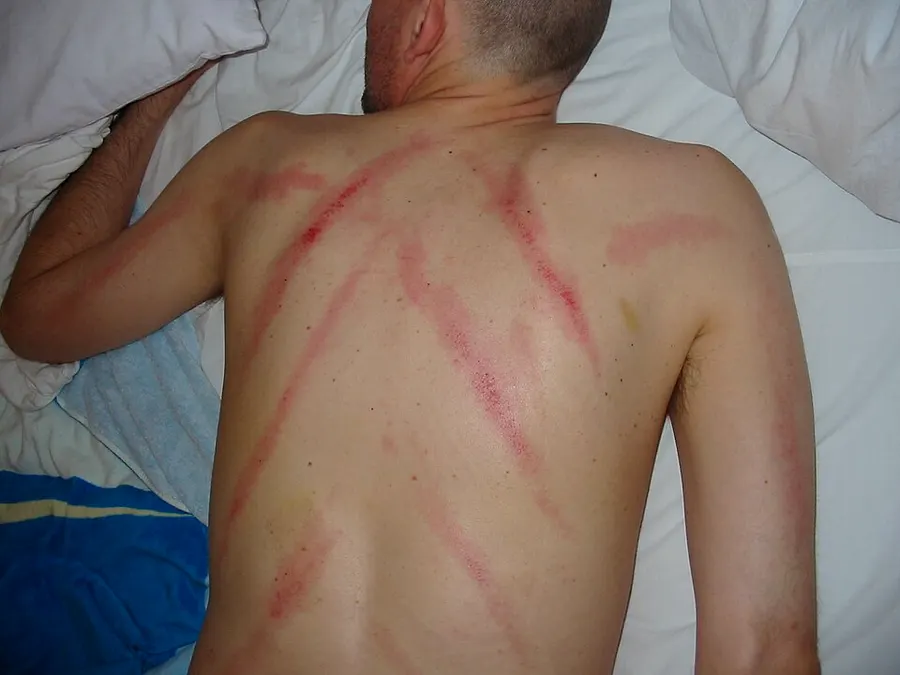
Guasha is a traditional Chinese healing technique where the skin is scraped with a smooth-edged tool to produce light bruising. Practitioners use jade, buffalo horn, or ceramic spoons to scrape the skin in long strokes along meridian pathways. The resulting petechiae (sha) are believed to release pathogenic factors and improve circulation. Guasha is commonly used for fever, headaches, respiratory infections, and musculoskeletal pain. Rooted in Ming Dynasty folk medicine, it remains widely practiced.
382+
Years of Unbroken Lineage
1
Related Cultural Vectors
History & Development
Gua sha scrapes lubricated skin with a smooth jade or horn plate until red speckles called sha surface, a technique families reached for at the first sign of heatstroke, chill, or stiff neck. The Qing physician Guo Zhisui's 1674 monograph on sha disorders organised diagnosis and scraping protocols into a formal branch of medicine.
Migrant communities carried gua sha across Southeast Asia, where variants named kerokan and coining became household fixtures, and Western spas later adopted the plates for facial work. Research groups have since measured local microcirculation increases after treatment, giving an old folk remedy modern instrumentation.
How It Is Made
- 01
Oiling the field
Massage oil spreads over the nape, shoulders, or back so the plate glides without dragging or abrading skin.
- 02
Scraping in strokes
One-sided passes follow channel lines with moderate pressure, repeated until petechiae bloom and fade within the same stroke zone.
- 03
Reading the sha
Colour depth guides interpretation, from light pink suggesting recent chill to deep purple marking long-standing stagnation.
- 04
Closing with warmth
Patients cover the treated area, sip warm water, and rest away from wind while the marks settle over the next days.
Common Questions
Does scraping damage skin?
Petechiae are controlled capillary signs, not wounds; they fade within three to five days and the technique avoids broken skin entirely.
When do people use it?
Onset of feverish colds, neck stiffness, and humid-heat discomfort top the list, often before booking needles through related cupping therapy.
Why the smooth stone?
Jade or water-buffalo horn edges distribute pressure evenly, letting practitioners control depth precisely, unlike coins or spoons improvised historically.
Watch & Learn
Stories & Legends
Acupuncture: The Map of Energy
historicalThin needles, deep wisdom: the 2,000-year-old map of meridians.
Skills & Techniques
Guasha Scraping Technique expand_more
The therapeutic technique of scraping the skin with a smooth-edged tool along meridian pathways to release stagnation and promote circulation.
Steps
- Select the scraping tool (jade, buffalo horn, or ceramic spoon)
- Apply massage oil or herbal balm to the treatment area
- Hold the tool at a 45-degree angle against the skin
- Scrape in long, unidirectional strokes along meridian pathways
- Observe the skin response — petechiae (sha) indicates stagnation release
- Clean the area and advise the patient on post-treatment care (rest, hydration)
Tools
jade scraper, buffalo horn scraper, ceramic spoon, massage oil bottle
Materials
gua sha oil, herbal balm, cotton towels, medical alcohol
Related Places
Relationship Constellation
Tracing the invisible threads that connect Guasha Scraping Therapy to the broader civilization ecosystem.
Continue the Journey
Guasha Scraping Therapy
Traditional Medicine
TCM Four Diagnostic Methods
Traditional Medicine
arrow_forwardCupping Therapy
Traditional Medicine
arrow_forward