Traditional Dance
Foshan, South China
Han Dynasty (202 BCE–220 CE)
National Heritage
Master-Apprentice
Oral Tradition
Dragon Dance
"A spectacular dance where performers bring a giant dragon to life with coordinated movements — a symbol of power, wisdom, and good fortune."
CIVILIZATION CONTEXT
This artifact is part of the Intangible Heritage Cluster. It connects to 12 entities across the atlas, spanning 1 region, 0 masters, 2 festivals, and 0 skills.
Dragon Dance: A Living Heritage
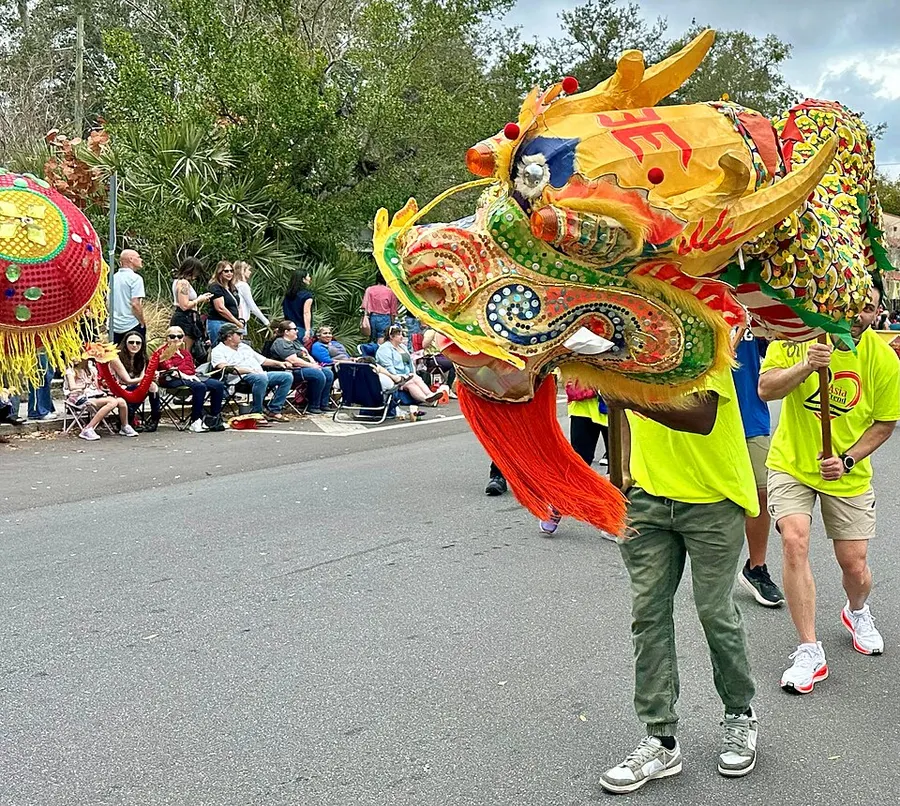
The Dragon Dance is a traditional Chinese dance where performers manipulate a long, flexible dragon figure using poles. The dragon, made of silk, paper, and bamboo, can range from 20 to over 100 meters in length. Performers coordinate their movements to make the dragon undulate, twist, and dive, symbolizing power, dignity, and good fortune. It is performed during festivals, especially Spring Festival and Lantern Festival.
2228+
Years of Unbroken Lineage
0
Related Cultural Vectors
History & Development
The dragon dance began as a rain rite and hardened into China's most recognisable procession art. Han-dynasty texts record "dancing dragon" prayers for rain during droughts, and by the Tang era court chronicles describe hundred-section dragons wheeled through capital streets on festival nights. The logic was always sympathetic: dragons govern water, so a dragon made to move vigorously through a village summons the same vigour in the skies. Lantern-lit night performances gave rise to the separate fire dragon tradition, its sections studded with burning candles so the creature appears as a chain of light.
Modern competition codified the folk form without freezing it. The International Dragon and Lion Dance Federation, founded in 1995, standardised ten-dragon-ball routines, scoring for precision of the eight classic formations before speed and stamina entered the equation. A full competitive team fields nine or more carriers plus a ball-bearer, and elite crews run 100-metre courses in under 30 seconds while keeping every section's arc unbroken. The art entered the first batch of China's national inventory in 2006, and troupes now train on the same gym mats as gymnasts, treating a 15-kilogram head as routine equipment.
How It Is Made
- 01
Building the head
Bamboo frames shaped into brow, horn, and jaw take days to curve; a competition head weighs up to 15 kilograms yet must balance on one carrier's pole.
- 02
Stitching the scales
Panels of cloth and metallic foil are cut to overlap like roof tiles, so light ripples across the body when each section rises and dips.
- 03
Drilling the eight formations
Crews rehearse wave, spiral, and cross patterns until the ball-bearer and head-carrier read each other without a word.
- 04
Serving the eye-dotting
Ceremonies open with dots of cinnabar on the painted eyes, the moment a crafted prop is understood to wake into a dragon.
Common Questions
How many dancers carry a dragon?
Folk dragons run from nine sections to more than fifty; competition standard uses nine-plus carriers, while festival dragons in Guangzhou can exceed a hundred metres.
What is the difference from lion dance?
The lion is worked by two performers inside one costume and emphasises leaps, whereas the dragon is an open framework carried on poles, as explained on our lion dance page.
When is it performed?
Spring Festival through Lantern Festival nights, second-month dragon-head day, and openings of any venture believed to need auspicious wind and water.
Watch & Learn
Stories & Legends
The Dancing Lion: From Exorcism to Celebration
historicalWhen two people become one beast, evil spirits flee and prosperity arrives.
Related Places
Related Festivals
Relationship Constellation
Tracing the invisible threads that connect Dragon Dance to the broader civilization ecosystem.
Continue the Journey
Dragon Dance
Traditional Dance
Lion Dance
Traditional Dance
arrow_forwardYangge Dance
Traditional Dance
arrow_forwardHua'er Folk Songs
Traditional Music
arrow_forward