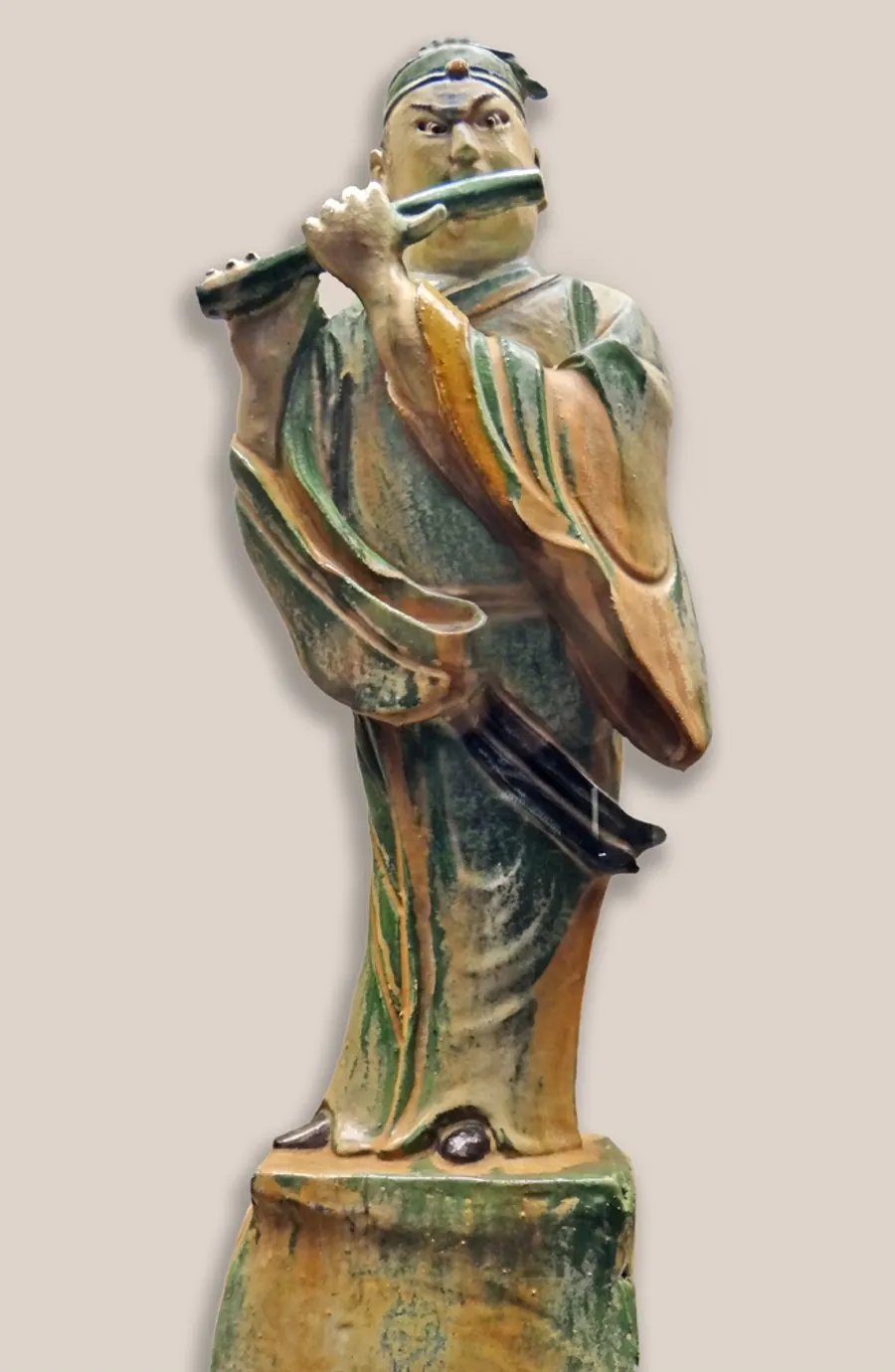
Traditional Music
Suzhou, East China
Han Dynasty (202 BCE–220 CE)
National Heritage
Master-Apprentice (Oral/Aural)
Oral Tradition
Dizi (Chinese Bamboo Flute)
"China's iconic bamboo flute with its distinctive buzzing membrane — a bright, versatile voice in every Chinese musical tradition."
CIVILIZATION CONTEXT
This artifact is part of the Intangible Heritage Cluster. It connects to 5 entities across the atlas, spanning 1 region, 0 masters, 0 festivals, and 0 skills.
Dizi (Chinese Bamboo Flute): A Living Heritage
The dizi is a Chinese transverse bamboo flute with a distinctive buzzing membrane (dimo) covering a special hole, giving it a bright, resonant timbre. With a history spanning over 2,000 years, it is the most popular wind instrument in Chinese folk music. Regional styles include the northern bangdi (high, bright) and southern qudi (mellow, lyrical). The dizi is essential in folk ensembles, opera, and solo performance.
2228+
Years of Unbroken Lineage
0
Related Cultural Vectors
History & Development
Flutes rank among China's oldest instruments, with Jiahu bone examples about eight thousand years old, and the bamboo transverse dizi matured into opera and ensemble work by the Ming dynasty. Its signature is the dimo, a thin membrane glued over a special hole that vibrates with the air column and gives the flute its bright, reedy buzz.
Two families dominate: the shorter bangdi of northern opera bands cuts through percussion with brilliant tonguing, while the longer qudi of the south breathes mellow lines beneath Kunqu singers. Classics such as Partridges Flying and Five Bangzi Variations anchor the conservatory syllabus, and makers tune each tube by boring and reaming until pitch and timbre balance.
How It Is Made
- 01
Selecting and curing bamboo
Makers choose mature purple or white bamboo, season it for years, then bore the bore true so every hole lands on pitch.
- 02
Fitting the dimo membrane
A sliver of reed membrane is moistened and smoothed over the膜孔 with garlic juice, tensioned until it buzzes cleanly at playing pressure.
- 03
Controlling breath and tongue
Circular breathing sustains long phrases, while single, double, and flutter tonguing create the northern style's rolling percussion effects.
- 04
Switching regional families
Players keep both bangdi and qudi on the rack, changing flutes to shift from opera-driven brilliance to southern lyrical warmth.
Common Questions
What is the dimo for?
The membrane adds a harmonic buzz that amplifies projection outdoors; without it the dizi sounds like a plain western flute, which is why players carry spare membranes taped inside their cases.
How do bangdi and qudi differ?
Bangdi is short, bright, and tongued hard for northern opera, qudi longer and rounder for southern ensembles, including the flute seat beside Kunqu opera singers.
Is the dizi hard to start?
Beginners usually produce a tone within days, but the membrane fitting, breath control, and ornament systems take years, mirroring the graded path of guzheng study.
Watch & Learn
Stories & Legends
The Lute That Crossed the Desert: Pipa
historicalA Persian instrument that crossed the Silk Road and became unmistakably Chinese.
Related Places
Relationship Constellation
Tracing the invisible threads that connect Dizi (Chinese Bamboo Flute) to the broader civilization ecosystem.
Continue the Journey
Dizi (Chinese Bamboo Flute)
Traditional Music
Ansai Waist Drum Dance
Traditional Dance
arrow_forwardDragon Lantern Dance
Traditional Dance
arrow_forwardPipa (Chinese Lute)
Traditional Music
arrow_forward