Traditional Medicine
Beijing, North China
Han Dynasty (202 BCE–220 CE)
National Heritage
Lineage Transmission
Oral Tradition
Chinese Herbal Medicine
"A sophisticated system of herbal healing with thousands of formulas, rooted in Daoist philosophy and millennia of clinical observation."
CIVILIZATION CONTEXT
CROSS-SITE REFERENCES
This artifact is part of the Intangible Heritage Cluster. It connects to 13 entities across the atlas, spanning 1 region, 1 master, 0 festivals, and 0 skills.
Chinese Herbal Medicine: A Living Heritage
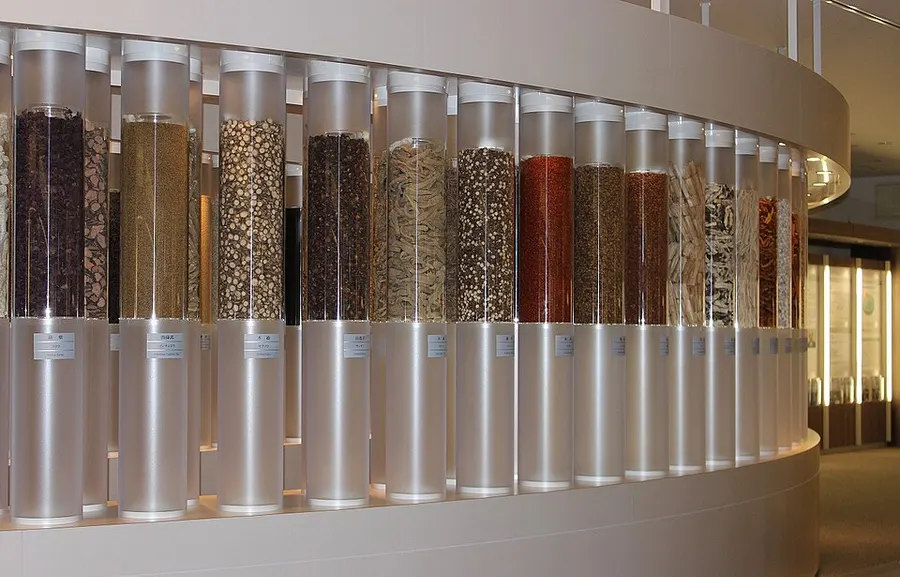
Chinese herbal medicine is a cornerstone of Traditional Chinese Medicine, using a pharmacopeia of thousands of plant, mineral, and animal substances. Formulas are prescribed according to the principles of yin-yang balance and the five phases theory. The earliest known pharmacopeia, Shennong Bencao Jing, dates from the Han Dynasty. Today, herbal medicine is practiced alongside biomedicine in Chinese hospitals and has gained worldwide popularity.
2228+
Years of Unbroken Lineage
0
Related Cultural Vectors
History & Development
Written herbal medicine begins with the Shennong Bencao Jing, which catalogued 365 medicines by the first century CE. Li Shizhen spent twenty-seven years surveying pharmacies and mountains before completing the Bencao Gangmu in 1578, a compendium listing 1,892 substances and more than 11,000 prescriptions that European botanists translated within decades.
Research kept widening the canon. Chemists isolated artemisinin from sweet wormwood in 1972, work that earned Tu Youyou the 2015 Nobel Prize and cut malaria deaths worldwide, and WHO adopted a traditional-medicine chapter into ICD-11 in 2019, giving herbal diagnoses standard international codes for the first time.
How It Is Made
- 01
Harvesting at the season
Collectors dig roots in autumn, pick flowers at full bloom, and gather leaves before flowering because active compounds shift through the plant's cycle.
- 02
Processing with pao zhi
Herbs are dried, steamed, or stir-fried with honey, vinegar, or wine to temper harsh properties and direct each drug toward specific channels.
- 03
Compounding the formula
Practitioners combine four or more herbs in sovereign, minister, assistant, and envoy roles so the blend treats the pattern rather than a lone symptom.
- 04
Decocting the dose
Patients simmer raw herbs in ceramic pots through two water rounds and merge the liquids, drinking the combined decoction warm once or twice daily.
Common Questions
Is herbal medicine used alongside acupuncture?
Yes, both branches share one diagnostic framework of patterns and channels, so clinics routinely pair prescriptions with needle courses described under acupuncture and moxibustion.
Can herbs be taken with prescription drugs?
Some combinations interact, notably liquorice with diuretics and dang gui with blood thinners. Licensed practitioners screen medication lists before prescribing, and patients should tell both doctors what they take.
Does food therapy belong to the same system?
It does. Ingredients such as ginger, lotus seed, and mutton are classified by thermal nature and flavour, a dietary branch detailed in Chinese dietary therapy that prescribes congees and soups by season.
Watch & Learn
Stories & Legends
Medicine Without Borders: TCM's Ancient Wisdom
historicalA system of medicine that views the human body as a microcosm of the universe.
Acupuncture: The Map of Energy
historicalThin needles, deep wisdom: the 2,000-year-old map of meridians.
Related Places
Generations Preserved
Wen Shizhen
Wen Shizhen is a senior practitioner of Traditional Chinese Medicine and herbal pharmacology in Beijing. A descendant of a lineage of TCM doctors spanning seven generations, he specializes in herbal f...
Relationship Constellation
Tracing the invisible threads that connect Chinese Herbal Medicine to the broader civilization ecosystem.
Continue the Journey
Chinese Herbal Medicine
Traditional Medicine
Tuina Massage
Traditional Medicine
arrow_forwardChinese Wrestling (Shuai Jiao)
Traditional Sports
arrow_forwardLantern Festival
Folk Customs
arrow_forward