Traditional Drama
Shaanxi Province, Northwest China
Ming Dynasty (1368–1644 CE)
National Heritage
Master-Apprentice (Oral/Aural)
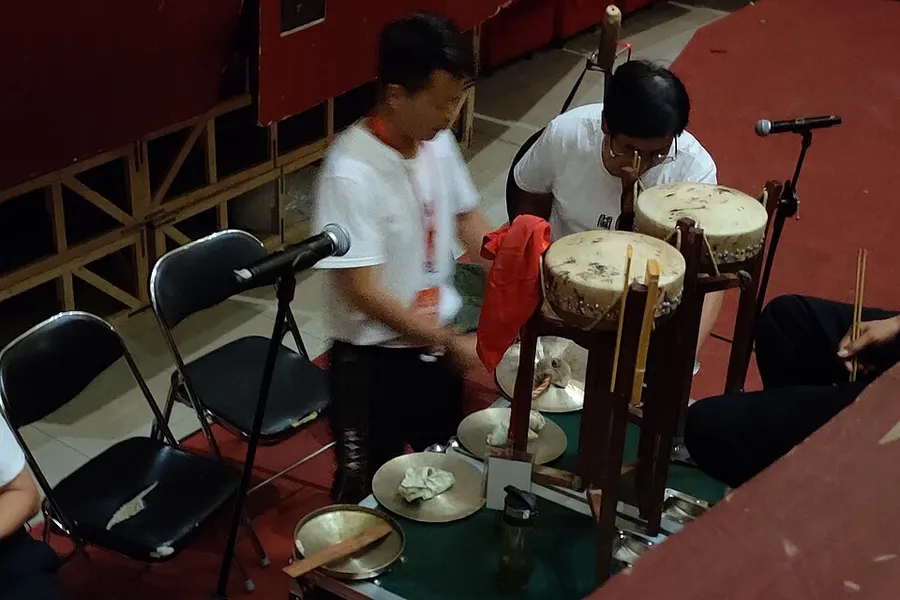
Qin Opera (Qinqiang) Performance
Qin Opera (Qinqiang)
"The oldest surviving Chinese opera form from Shaanxi, known for its loud, vigorous style and distinctive bangzi clapper rhythm."
CIVILIZATION CONTEXT
This artifact is part of the Intangible Heritage Cluster. It connects to 8 entities across the atlas, spanning 2 regions, 0 masters, 0 festivals, and 1 skill.
Qin Opera (Qinqiang): A Living Heritage
Qin Opera, or Qinqiang, is the oldest existing Chinese opera form, originating in the Qin region of Shaanxi Province. Its music is characterized by a distinctive loud, vigorous style with bangzi (wooden clappers) setting the rhythm, giving it the nickname "Bangzi Opera." Performers use wide, sweeping movements and powerful, open-throated singing that reflects the rugged landscape of the Loess Plateau. Qinqiang has influenced numerous other opera forms across northern China.
382+
Years of Unbroken Lineage
1
Related Cultural Vectors
History & Development
Qinqiang of Shaanxi stands as the ancestor of China's clapper operas, its bangzi woodblock marking the strong-beat singing that seeded dozens of regional genres across the north. Ming-Qing guild halls in Xi'an hosted touring companies, and the genre's roaring chest voice earned the folk saying that a Qinqiang roar shakes the eight-hundred-li plain.
Stunts define its spectacle: fire-spitting spirits, hat-feather twirling, and the ghostly hair-swing of wronged heroines. The State Council listed Qinqiang in the first heritage batch in June 2006, and the Xi'an Qinqiang Theatre maintains a research institute that records ageing masters' techniques on film.
How It Is Made
- 01
Roaring the bangzi lines
Singers drive from the diaphragm in sustained shouts, a stamina style locals call earning one s living by the throat.
- 02
Beating the clapper
The hardwood bangzi sets rigid strong-weak accents, and singers phrase against it for the genre's driving urgency.
- 03
Performing the stunt repertoire
Fire breath, feather dances, and hair swings mark supernatural and tragic scenes, each stunt drilled with safety masters.
- 04
Painting the bold faces
Jing roles wear thick colour blocks coding loyalty, treachery, and wildness, bolder than eastern genres to read at fairground distance.
Common Questions
Why so loud?
Open-air stages on the loess plateau demanded projection over wind and crowds, and audiences came to prize vocal power as beauty.
Which genres descend from it?
Jin, Yu, and Hebei clapper styles all borrowed its beat structure, spreading the template far beyond Xi'an before regional tastes diversified.
What should a first performance include?
A classic like The Executioner Ren or Broken Bridge shows both the roaring arias and stunt work that define the style staged in Shaanxi theatres.
Watch & Learn
Stories & Legends
The Art of Silence: Peking Opera's Journey from Court to World
historicalIn a Peking Opera performance, every gesture tells a story.
Skills & Techniques
Qin Opera (Qinqiang) Performance expand_more
The vigorous, loud performance style of Qinqiang with open-throated singing, broad sweeping movements, and rapid bangzi percussion.
Steps
- Develop the powerful, open-throated Qinqiang vocal projection
- Master the distinctive "hua lian" (painted face) role movements
- Learn the bangzi rhythm patterns that drive the performance
- Practice the sweeping, bold stage gestures unique to Qinqiang
- Study the martial role (wusheng) combat sequences and acrobatics
Tools
bangzi clappers, painted face mask, horsewhip prop, spear
Materials
silk costume, mineral face paints, stage boots, beard ornaments
Relationship Constellation
Tracing the invisible threads that connect Qin Opera (Qinqiang) to the broader civilization ecosystem.
Continue the Journey
Qin Opera (Qinqiang)
Traditional Drama
Kuaiban (Clapper Talk)
Quyi
arrow_forwardTanci (Ballad Singing)
Quyi
arrow_forwardYue Opera
Traditional Drama
arrow_forward