A Vocabulary of Heat
Ask what makes Chinese cooking distinct and the answer often turns to heat: food cooked quickly in a very hot wok, or simmered slowly for hours, with an emphasis on controlling the fire and cutting ingredients to a uniform size. Techniques are commonly grouped by how heat is applied — dry heat, wet heat, and combinations of the two. That grouping is a useful way into the subject, though it is a general description rather than a single official classification, and different sources count the techniques differently.
This page treats the vocabulary as a cultural and craft question, not a set of instructions. It asks what the named methods are, why heat control and knife work carry so much weight, and where the practice sits in a national heritage register. It does not give steps, oil temperatures, timings or proportions — those belong to recipe sources and are outside the scope of a foodways essay.
Named Techniques
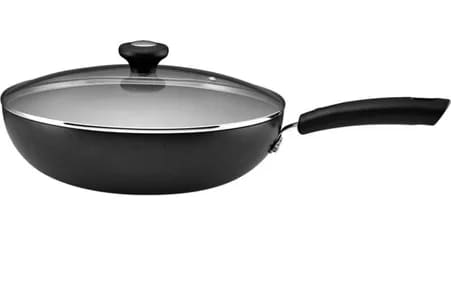
A handful of technique names recur across descriptions of Chinese cooking. Stir-frying (chǎo) means cooking small pieces quickly over high heat while tossing them in a wok; it is associated with wok hei, the "breath of the wok" that cooks describe as a distinct aroma. Deep-frying (zhá) and shallow-frying (jiān) use oil to form a crisp surface. Steaming (zhēng) and braising or red-cooking are wet-heat methods, used where the aim is tenderness or a slow-built flavour. Britannica, describing regional traditions, notes that southern cooking favours light methods such as steaming and stir-frying, that Hunan food is "steamed, stir-fried, roasted, braised, or smoked", and that Anhui cooking leans toward braising and stewing.
These names are part of a shared vocabulary, not a fixed list with an authoritative count. You will see cookbooks and websites enumerate ten, forty or more methods; those numbers reflect how an author chooses to group things, not a standard agreed across the tradition. The useful point for a cultural page is that the vocabulary exists, is widely understood, and is transmitted through practice. One name that draws particular search interest is velveting, a preliminary treatment used to soften meat before cooking. Its popularity in search leads to step-by-step recipes; this page notes the term as part of the technique vocabulary and leaves the method to recipe sources.
Fire and Knife
Two ideas sit behind the technique names. The first is control of heat — knowing when a wok is hot enough, when to lower the flame, and how a change in heat changes the result. The second is cutting: ingredients are prepared in uniform sizes so that they cook evenly, whether the method takes seconds or hours. Both are judgements learned by doing. A written list of techniques can name them, but it cannot transfer the feel for heat or the rhythm of knife work; that passes from a cook to a learner in a kitchen.
This is the transmission lens of the foodways collection applied to a craft. It is the same point made by the tofu history study, where the named stages of a making process matter less than the judgement a maker acquires in a workshop. Here the craft vocabulary is learned in professional kitchens and family kitchens alike, which is why it appears in both restaurant technique guides and household cooking traditions.
Methods and Regions
Techniques are not distributed evenly. Britannica describes Chinese cuisine as historically grouped into four great traditions by geography — Lu in the north, Yue in the south, Chuan in the west and Huaiyang in the east — and notes that a more detailed eight-cuisine classification emerged in the 1980s, often attributed to the journalist Wang Shaoquan. Regional climate and ingredients shaped what methods suited a place: steaming and light stir-frying in the humid south, braising and stewing in Anhui, the heavily spiced profiles of the west. The numbing-and-spicy pairing discussed in the Sichuan numbing study is one regional example of a technique-and-flavour tradition.
These regional labels are a context for methods, not a set of rival claims about which cuisine is best, and this page does not rank them or treat the eight-cuisine scheme as a settled official standard. It is a classification that grew out of a particular moment in the 1980s and is still widely repeated. For the purpose of a heritage page, the important fact is that methods travel with regional traditions and are carried by cooks who learned them in those traditions.
The Heritage Entry
There is a direct heritage anchor for all of this. In 2021 the State Council inscribed Chinese cooking techniques and food customs on the fifth batch of the national intangible cultural heritage list under project number Ⅷ-269, with the China Cuisine Association named as the protecting unit. A number of regional cooking traditions are separately listed as national projects — Zhili official cuisine, Confucius family cuisine, Liaoning cuisine, Shanghai local cuisine, and the cooking techniques of Anhui, Chaozhou and Sichuan among them. Each entry names a transmitted practice, not a dish to be ranked or a restaurant to be promoted.
Read carefully, this changes what "a cooking method" means. It is not just a way of applying heat; in the heritage frame it is knowledge held by cooks and passed to others, tied to food customs and local tradition. That is why this page stops short of recipes and ratings. The documented part — the existence of the technique vocabulary, the regional traditions, the national entries — can be stated. The rest, including any claim that one method or cuisine is superior, is not supported here and is left where it belongs, in the kitchens and sources that make such claims.